
Add Row
Add Element
cropper
update

TALENT PULSE NEWS

update
Add Element
  • Home
  • Categories
    • Talent Acquisition Trends
    • Culture & Engagement
    • Employer Branding & Candidate Experience
    • Hiring Tools & HR Tech
    • Policy & Workforce Law
    • Employee Resource Group News
    • Featured
June 24.2025
2 Minutes Read

Boosting Employee Engagement: Understanding Payroll Insights and Trends

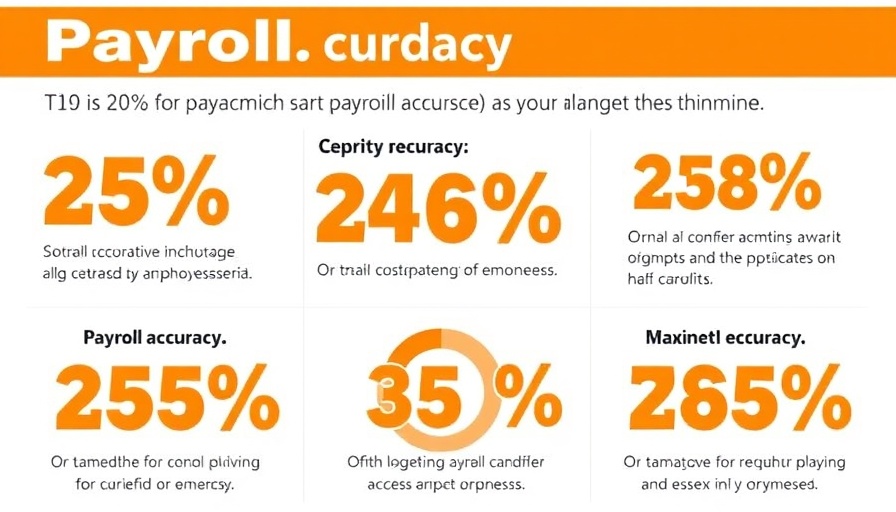
Infographic on payroll accuracy and employee engagement concerns

Understanding Payroll for Enhanced Employee Engagement

In today's workplace, the shift towards digital payroll systems can often leave employees feeling distanced from their compensation details. This disconnect is not merely a minor issue; it poses significant challenges to employee engagement and overall workplace wellbeing.

The Financial Stress Connection

According to a PwC survey, employees facing financial stress are almost five times more likely to be distracted at work by personal finance worries. This statistic highlights the urgent need for HR leaders to address payroll transparency. Ensuring employees understand their paychecks can alleviate some of this financial tension, allowing for a more focused and engaged workforce.

Generation Gap in Payroll Understanding

New research from Deel reveals a concerning trend: nearly 30% of employees lack clarity on paycheck deductions, with Millennials and Gen Z particularly struggling. In comparison, older generations report greater confidence in navigating payroll complexities. This generational gap underlines the necessity for tailored communication strategies regarding compensation details, especially as younger workers frequently prioritize insights into their earnings.

The Importance of Payroll Accuracy

Over a third of employees have identified errors in their paychecks, which contributes to stress levels surrounding payroll accuracy. The rise of AI managing payroll data has compounded these concerns, as nearly half of workers express apprehension about technology handling their salaries. A collective effort is needed to foster clarity and build trust within payroll systems, enhancing the employee experience.

Strategies for Improvement

To improve payroll understanding and accuracy, employers can invest in clear communications and educational resources that help demystify paychecks. By promoting an accessible understanding of compensation structures and encouraging inquiries about deductions, organizations can cultivate an environment where employees feel valued and engaged.

As businesses continue to evolve, prioritizing employee understanding of payroll could greatly impact recruitment and retention efforts, enhancing both employer branding and overall productivity.

Employer Branding & Candidate Experience

0 Comments

Write A Comment

*
*
Related Posts All Posts
02.21.2026

The Fallout from Prince Andrew's Arrest: Understanding His Ties to Jeffrey Epstein

Update A Historic Arrest: Unraveling Prince Andrew's Ties to Jeffrey EpsteinOn February 19, 2026, the British monarchy faced a profound crisis as Andrew Mountbatten-Windsor, known publicly as Prince Andrew, was arrested on allegations of misconduct in public office. His arrest follows long-standing questions surrounding his troubling association with the convicted sex offender, Jeffrey Epstein.Understanding the Timeline of EventsThe relationship between Prince Andrew and Epstein has been scrutinized since they first met in 1999, introduced by Ghislaine Maxwell. Over the years, the duo attended numerous events together, known to interact within circles that included the elite of society. However, Andrew's ties became increasingly problematic following Epstein's 2008 conviction for solicitation of prostitution involving minors.In December 2010, just months after Epstein's release, Andrew visited him in New York—a move he later described as a “mistake.” This visit significantly marred his reputation, leading to further questions that would persist for over a decade. Fast forward to 2015, when Virginia Giuffre named Prince Andrew in her defamation lawsuit against Epstein and Maxwell, alleging that she was trafficked to him as a minor. Though the claim was struck from the record, it revived scrutiny on Andrew, prompting public outcries and a notable settlement reached with Giuffre in 2022.The Broader Impact on the Royal FamilyAndrew's arrest is not merely a personal crisis but a blow to the British royal family, further igniting discussions about its accountability and relevance in contemporary society. King Charles III emphasized that “the law must take its course,” indicating the monarchy’s commitment to transparency amid turmoil.Critics argue that Andrew's actions have jeopardized public faith in the monarchy, as evidenced by a decline in support for the royal family from 86% in 1983 to just 51% in 2024. The public's response to the authorities’ decision to act against a royal reflects a significant shift in accountability standards, setting a precedent that even members of the monarchy are not above the law.Future Considerations and ReformsAs details continue to unfold, discussions surrounding the future of the royal institution are paramount. Experts suggest that the monarchy must actively address concerns regarding royal accountability. With increasing scrutiny of previous closures of cases involving powerful figures, there are calls for comprehensive reforms within the royal governance framework to restore faith among the public.Actions such as stripping titles or distancing public figures from the institution are seen as necessary steps to mitigate damage. King Charles's recent measures against Andrew demonstrate a keen recognition of this reality—a pivotal move for a monarchy striving to maintain relevance and support amidst evolving societal values.Conclusion: A Call to ActionFor employer brand managers and organizations concerned with reputation management, the unfolding situation surrounding Prince Andrew illustrates vital lessons in transparency, accountability, and public trust. As the scrutiny on royal behavior has shown, actions taken by public figures resonate deeply with public perception and can significantly alter an organization's standing. As these developments progress, keep an eye on how they may influence broader trends in employer branding and organizational integrity.

02.19.2026

The Ongoing Battle for Prediction Markets: What Employers Must Know

Update The Rising Conflict Over Prediction Markets In an unprecedented move that echoes throughout the legal and financial sectors, the Commodity Futures Trading Commission (CFTC) is stepping up its defense of prediction markets like Kalshi and Polymarket. CFTC Chairman Michael Selig's recent statements assert federal authority over these markets, starkly opposing state-level interventions aimed at banning them as illegal gambling operations. This clash is not just about regulation but encapsulates a broader debate about the evolving landscape of financial derivatives and modern betting practices. The Case for Prediction Markets: A Societal Function Selig argues that prediction markets perform valuable societal functions, including hedging commercial risks and providing a check on the accuracy of media narratives. This position has received support from industry representatives, emphasizing that prediction markets allow individuals to take calculated risks, compare opinions, and gain insights into various events—from political elections to pop culture trends. On the flip side, critics express deep concerns regarding the classification of these markets. Many lawmakers, including members from both parties, draw parallels between prediction markets and traditional gambling, arguing that they blur the lines between investment and betting. This contention is not merely academic; it resonates deeply with state officials and various advocacy groups pushing for consumer protections. The Legal Landscape: State vs. Federal Authority The struggle between state and federal jurisdictions is exemplified by the numerous legal battles escalating across the nation. Over 20 lawsuits have emerged against prediction markets, challenging their operations based on claims they function as gambling platforms rather than legitimate financial exchanges. These legal tussles highlight a complex regulatory framework that may ultimately require a Supreme Court ruling to clarify. Implications for Employers and Hiring Managers As employer brand managers and HR professionals navigate this evolving landscape, the implications for reputation management and the employee value proposition (EVP) cannot be ignored. Just like the ambiguous nature of prediction markets affects consumers, employers must manage potential perceptions associated with newer financial instruments that employees may engage with. Understanding the gambling-like features of prediction markets can aid in developing a comprehensive onboarding experience and a well-communicated career site optimization strategy. Furthermore, organizations might consider socially responsible policies surrounding employee participation in prediction markets, ensuring that their company's reputation remains intact amidst changing societal perceptions of gambling-like activities. This includes fostering open conversations about social recruiting efforts that integrate a clear understanding of employee behaviors in newer financial landscapes. Actionable Insights: Navigating the Uncertainty The rapid rise of prediction markets presents unique challenges and opportunities for businesses. Consider establishing a proactive Glassdoor strategy that bolsters your company's reputation while addressing any employee inquiries regarding participation in these markets. Equipping hiring managers with clear guidelines on discussing such financial instruments can ensure consistency across candidate journeys and reduce potential conflicts. With the ongoing debate surrounding prediction markets, maintaining flexibility and transparency will be crucial. Emphasizing responsible decision-making within your organization's culture can enhance employee engagement and promote a balanced view of emerging financial trends.

02.19.2026

Unlocking Agentic Lovemarks: Strategies for Employer Branding Success

Update Understanding the Shift to Agentic Lovemarks The marketing landscape is undergoing a significant transformation as artificial intelligence (AI) systems become key players in how consumers interact with brands. Thomas Marzano’s manifesto, Brand Constitutions: The Legible–Lovable Standard for Building Equity in an Agentic Economy, highlights the urgent need for brands to earn both human affection and machine trust. This dual audience approach complicates traditional brand affinity strategies and ushers in the idea of Agentic Lovemarks. The Evolution of Lovemarks The concept of Lovemarks originated from Kevin Roberts' belief that brands must evoke love and respect. However, in the current agentic age, brands must not only engage hearts but also communicate effectively with intelligent systems. This means they must build emotional connections with consumers while enhancing their structural clarity for machines. Brands that effectively integrate emotional resonance with machine visibility will lead the market, creating what are now termed Agentic Lovemarks. Building an Employment Brand Through Agency Engagement For employer brand managers and HR professionals, embracing this shift can refine how organizations attract and engage talent. A strong employee value proposition (EVP) that resonates emotionally strengthens a brand's reputation while inviting AI systems to recognize the brand's legibility. The key to optimizing the candidate journey is aligning employer branding strategies with both human experiences and algorithm-driven behavior, ensuring the company stands out on platforms like Glassdoor. The Importance of Machine Trust As candidates increasingly rely on digital platforms for career research, employers must ensure their branding mirrors the love-respect axis in a machine-readable way. This legibility is not just about clear messaging but also about creating a consistent and reliable brand presence that candidates can trust. Employers can do this through effective onboarding experiences and by optimizing career site content, ensuring potential hires can easily discover and understand the value of joining their organization. Embracing AI-Driven Insights for Reputation Management The rise of AI not only reshapes job seekers’ behaviors but also impacts how organizations measure and manage their reputation. By leveraging social recruiting, marketers can ensure that the narratives shared about their organizations align with the performance that candidates expect, creating a cohesive story that runs from visibility in search results to positive employee experiences. Conclusion: Bridging the Gap Between Emotion and Structure In a world driven by both human emotion and artificial intelligence, brands must transform their strategies to become Agentic Lovemarks. By fostering a strong emotional connection with employees and candidates, while ensuring legibility and trust with AI systems, organizations stand poised to thrive in this new era. Building a bridging narrative is key, as it will allow brands to be both loved by humans and recognized by machines.

Terms of Service

Privacy Policy

Core Modal Title

Sorry, no results found

You Might Find These Articles Interesting

T
Please Check Your Email
We Will Be Following Up Shortly
*
*
*